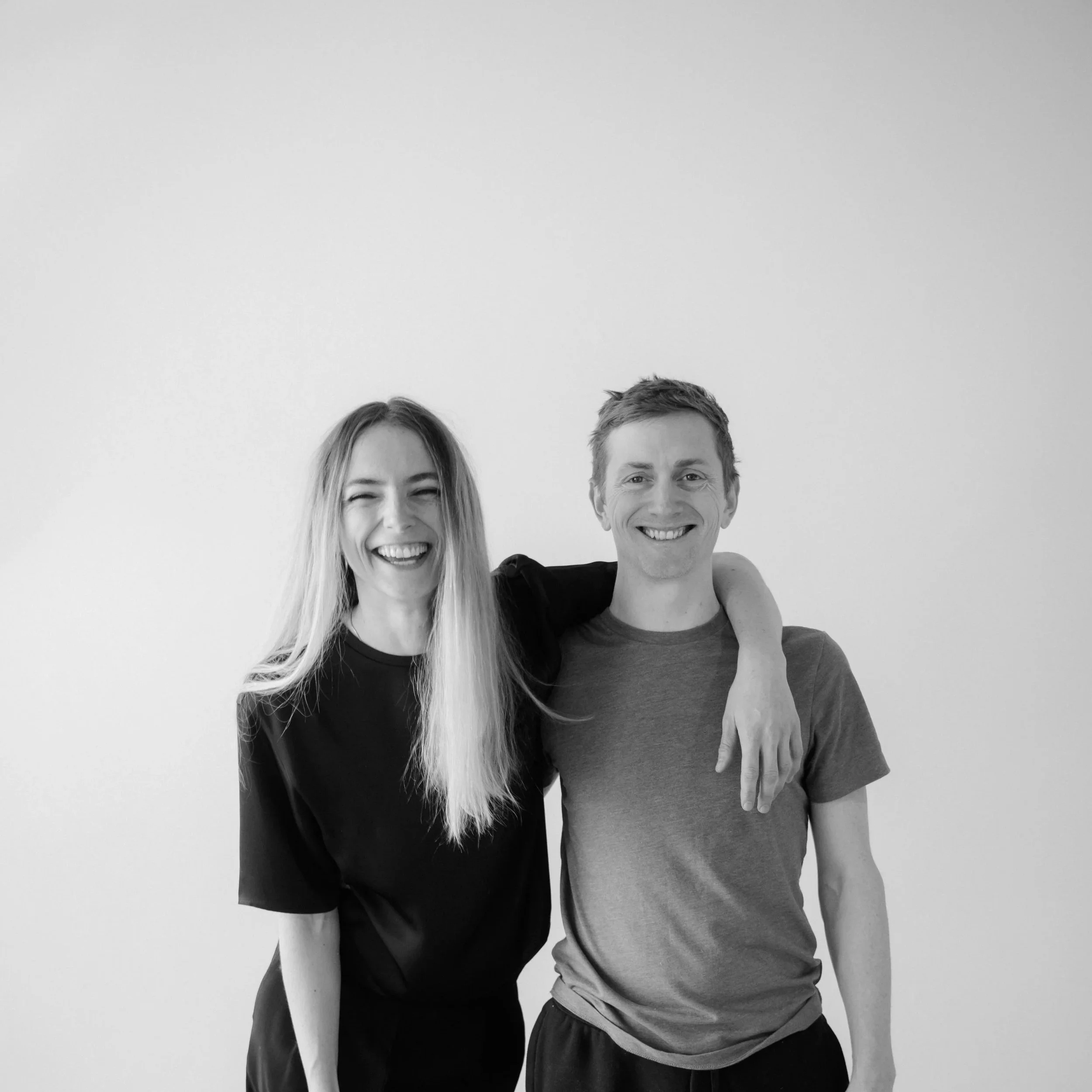
Rosa Stark
Rosa has been teaching yoga since 2012. Her background in medicine and psychology informs her work alongside advanced trainings with Jason Crandell, Annie Carpenter, and Judith Lasater. She draws on a nuanced understanding of anatomy and the nervous system, shaped by clinical and academic experience.
She is in the final stages of medical school while completing a PhD on yoga and psychiatric phenomena, researching the intersection of mental health and yoga — work that directly informs her teaching. Her classes are known for clarity and depth, integrating biomechanics, trauma-sensitive language, and subtle narrative arcs.
Rosa teaches not only what to instruct, but invites participants to experience why it works. Through practice, they explore nervous system regulation and complex alignment principles, learning to translate effort into efficiency and ease. Her sequencing is tailored to the individual.
Beyond the classroom, she brings warmth and intellectual curiosity to her work. When she is not teaching or studying, she is likely hiking in the hills of the San Francisco Bay Area — or searching for her keys in her apartment.
Joey Robinson
Joey’s path to teaching began with a deep attraction to truth and direct experience. After discovering yoga in 2005, what had been a philosophical search became anchored in embodied practice.
While influenced by his formal trainings in meditation, hatha and Anusara yoga, his teaching is primarily informed by thousands of hours of self-practice and deep immersion into eastern and western approaches to healing and self-development.
Joey teaches structure and mindfulness as tools for transformation. For him the practice is a laboratory — a place to notice habits, experiment, and refine. The aim is not performance. It’s authenticity and experiencing again and again how shifts in the body change the way we perceive, think, and relate to our experience.
In the classroom, he blends technical and philosophical clarity with creativity, humor, and a down-to-earth approach. He hopes students leave feeling lighter, steadier, and more connected — to their bodies and to themselves.