 Image 1 of 1
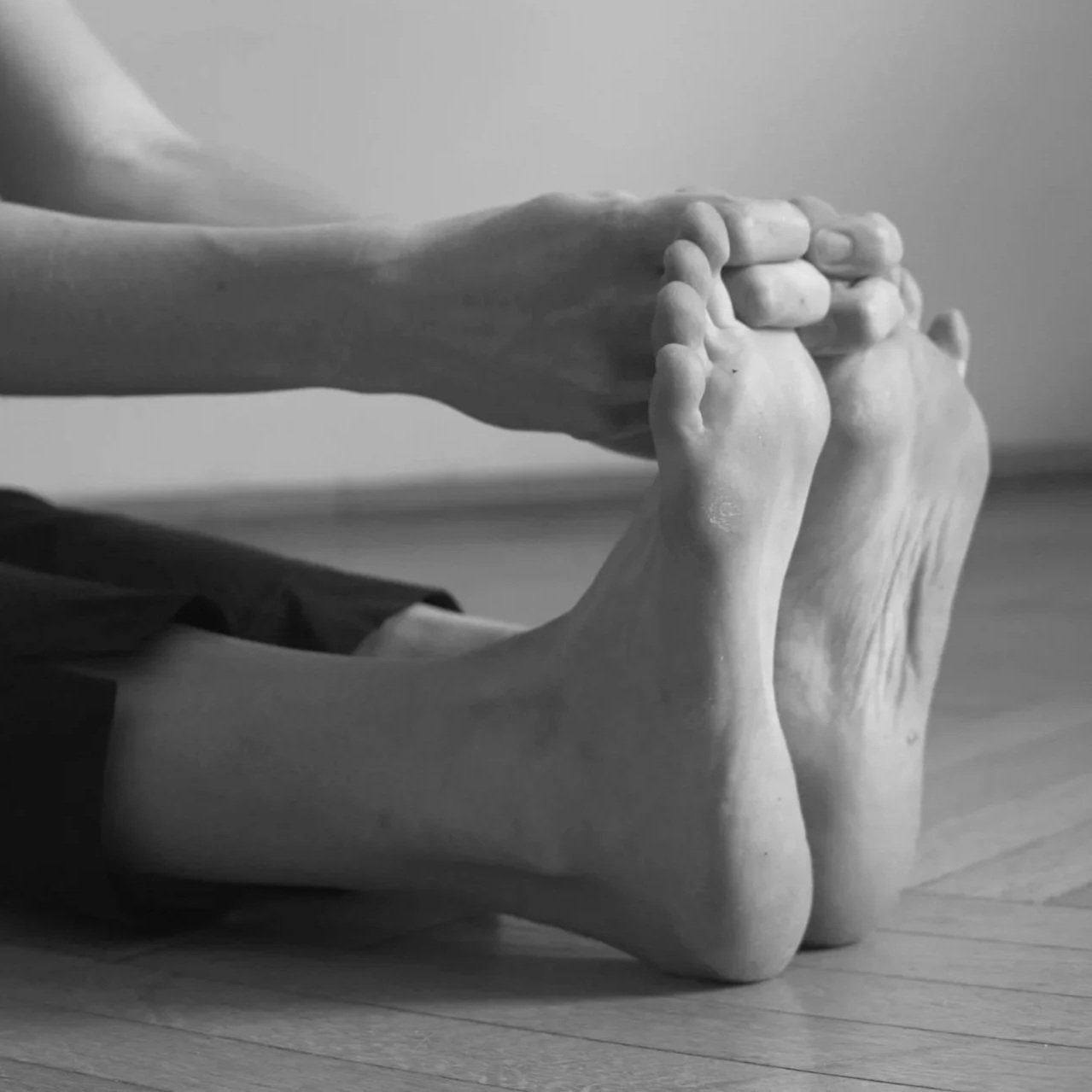
Module 1 builds the foundation for grounded yoga practice. Over four weekends, attention moves from the feet upward through the legs and hips to the pelvis. The work draws on functional anatomy, alignment principles, and yoga philosophy. These perspectives provide the framework for understanding how the lower body organizes and stabilizes movement.
Experience stands at the center of the training. Each weekend begins with extended yoga practice. Somatic inquiry and reflection accompany provide a framework for all content.
Safety asks: how does stability feel? What is the experience of presence? How can effort ease into efficiency?
The module examines how load travels through the body and how muscular strategies support or disturb balance. Asymmetries become visible through standing and dynamic asana labs, which develop practical ways to stabilize and adapt. Alongside this physical work, themes of boundaries, attraction and aversion, and samskaras are explored. The lower triangle gradually becomes established as the base for all further practice and teaching.
September 18 — 20, 2026: Feet
Themes:
Functional anatomy of the feet and ankles
Grounding and the experience of safety in practice
Load distribution in standing postures
Stabilization strategies and fatigue
October 9 — 11, 2026: Legs
Themes:
Functional anatomy of the legs and knees
Individual standing strategies and asymmetries
Dynamic leg use and proprioception in asana
Interplay between effort and yield in various aspects of yoga
November 6 — 8, 2026 : Hips
Themes:
Functional anatomy of the hips
Mobility and stability in the hip complex
Redistribution of force between legs and core
Boundaries — somatic, psychological, and philosophical explorations
December 4 — 6, 2026: Pelvis
Themes:
Functional anatomy of pelvis
Sacroiliac joints in Vinyasa based Yoga
Mula Bandha and integration of the lower triangle
Attraction and aversion, samskaras
Module 1 builds the foundation for grounded yoga practice. Over four weekends, attention moves from the feet upward through the legs and hips to the pelvis. The work draws on functional anatomy, alignment principles, and yoga philosophy. These perspectives provide the framework for understanding how the lower body organizes and stabilizes movement.
Experience stands at the center of the training. Each weekend begins with extended yoga practice. Somatic inquiry and reflection accompany provide a framework for all content.
Safety asks: how does stability feel? What is the experience of presence? How can effort ease into efficiency?
The module examines how load travels through the body and how muscular strategies support or disturb balance. Asymmetries become visible through standing and dynamic asana labs, which develop practical ways to stabilize and adapt. Alongside this physical work, themes of boundaries, attraction and aversion, and samskaras are explored. The lower triangle gradually becomes established as the base for all further practice and teaching.
September 18 — 20, 2026: Feet
Themes:
Functional anatomy of the feet and ankles
Grounding and the experience of safety in practice
Load distribution in standing postures
Stabilization strategies and fatigue
October 9 — 11, 2026: Legs
Themes:
Functional anatomy of the legs and knees
Individual standing strategies and asymmetries
Dynamic leg use and proprioception in asana
Interplay between effort and yield in various aspects of yoga
November 6 — 8, 2026 : Hips
Themes:
Functional anatomy of the hips
Mobility and stability in the hip complex
Redistribution of force between legs and core
Boundaries — somatic, psychological, and philosophical explorations
December 4 — 6, 2026: Pelvis
Themes:
Functional anatomy of pelvis
Sacroiliac joints in Vinyasa based Yoga
Mula Bandha and integration of the lower triangle
Attraction and aversion, samskaras